

If you sell on Amazon Australia, run a warehouse in Melbourne, or simply need personal goods delivered from Guangzhou to Sydney, you have probably seen a message like this: “Sea DDP to Australia — all-in price, no hidden fees.” It sounds clean. You add up carton weight, multiply by a rate, and assume the rest is someone else’s problem.
Then the invoice arrives with a storage charge you did not expect. Or customs asks for a product classification you never provided. Or the driver cannot enter your FBA appointment slot because the delivery leg was quoted as “metro door” but your FC code sits outside the included zone. The shipment is not necessarily dishonest — but the scope was never defined.
At Guangzhou Aodi International Logistics, we treat Sea DDP as a checklist, not a slogan. Zhang Di, who leads our China–Australia lane, stays on the file from first message to final delivery. Before we schedule pickup — whether from a factory in Foshan, a market stall in Yiwu, or a consolidation warehouse in Baiyun — we explain what is inside the quoted DDP band and what would trigger an adjustment. That is the difference between a cheap headline rate and a shipment you can actually budget.
What shippers think DDP means — and what actually happens
In trade terms, DDP (Delivered Duty Paid) means the seller or forwarder arranges carriage and bears the costs and risks of delivering goods to the named place of destination, including export clearance, import clearance, and applicable duties or taxes — unless the quote explicitly carves something out. In practice, on the China–Australia ecommerce lane, “DDP” has become a marketing word. Forwarders use it to mean “we will handle most paperwork and you pay one number per kilo.” Buyers hear “everything included.” The gap between those two interpretations is where disputes live.
The “one price, no worries” assumption
A typical seller scenario: you source 800 kg of homewares from three suppliers near Guangzhou. A WeChat contact quotes 2.1 AUD/kg Sea DDP to Sydney. You think that covers pickup, ocean freight, customs, GST, and delivery to your 3PL. You tell your suppliers to ship to the forwarder’s warehouse. Two weeks later you learn pickup from one supplier was never in the rate because they are 120 km outside the free pickup radius. You also discover the quote assumed tax-paid treatment but your product category needs a different declaration approach. The per-kilo number was real — for a narrow set of conditions you never confirmed.
The “customs is included” assumption
Clearance being “included” does not mean customs will accept any description you type on a packing list. Australian Border Force and biosecurity rules apply to wood packaging, food-adjacent items, products with batteries, and goods that look like branded merchandise without authorization documentation. If your cargo name was vague at quote stage — “general merchandise” instead of “silicone kitchen utensils, no battery” — the clearance team may need to reclassify, revalue, or hold the shipment. That is not an “extra fee scam”; it is what happens when product facts were not confirmed early.
The “DDP equals delivered to my exact address” assumption
Final delivery is the most misunderstood leg. Sea DDP quotes often default to a metro delivery zone or an Amazon FBA delivery program with specific appointment rules. A residential address in a regional town, a commercial dock without a forklift, or an FBA FC during peak cut-off windows may sit outside the standard inclusion. Some quotes deliver to a depot near Sydney and treat last-mile as optional. Unless that endpoint was written into the quote email, you should not assume door-to-door means every door in Australia.
Our viewpoint at Aodi is simple: DDP is a scope document disguised as an incoterm. We would rather lose a booking than let cargo move on a vague promise. If you are comparing forwarders, ask each one to reply in writing with the same inclusion list — export, ocean, clearance, tax treatment, and final mile — before you compare per-kilo numbers. Our Sea DDP service page shows the structure we use; this article goes deeper into each line.
China export handling: the first inclusion layer
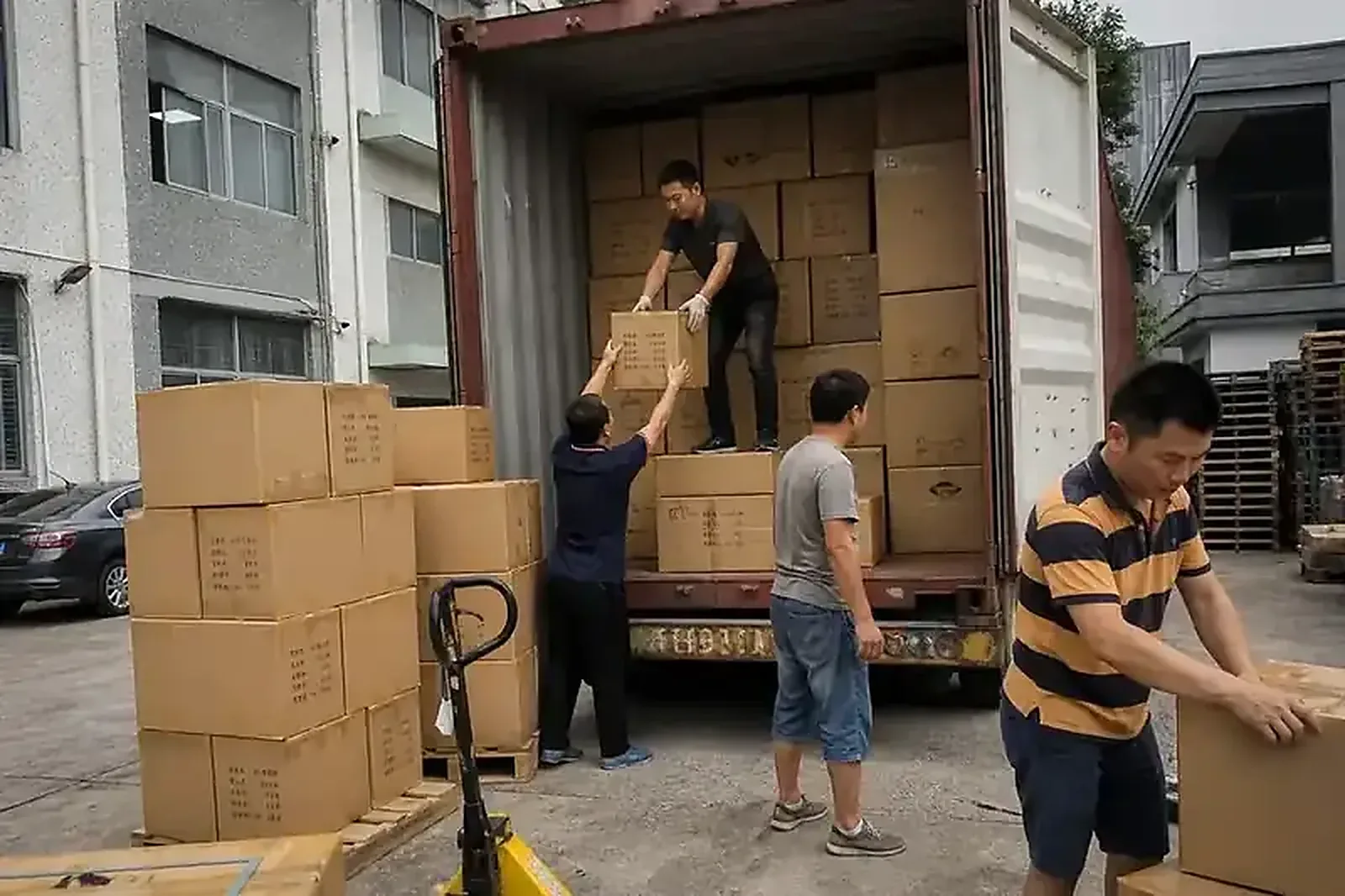
Before anything sails, cargo must be legally exported from China. That sounds obvious, yet many first-time shippers assume the forwarder “just picks up boxes.” Export handling includes receiving goods, checking outer packaging, consolidating if you have multiple suppliers, weighing and measuring chargeable weight or CBM, and preparing the export declaration. For Sea DDP, this layer is usually bundled — but the conditions matter.
Pickup, consolidation, and warehouse handling
Aodi offers free pickup for qualified general goods at 50 kg and above from many Guangzhou-area locations. That is an inclusion with geography and timing limits, not a universal rule. If your factory is in Wenzhou and you want everything merged in Guangzhou before export, we quote the domestic transfer separately or include it explicitly in the all-in band. Consolidation itself — unpacking supplier cartons, repacking onto pallets, labeling for FBA or for your SKU system — takes labor and space. When sellers send us twelve separate parcels from Taobao vendors, we confirm whether they arrive pre-labeled or need sorting. Skipping that conversation is how “included warehouse handling” turns into a labor surcharge after arrival.

Export documentation and compliance screening
China export declaration needs accurate commodity name, quantity, value, and HS code logic consistent with what Australia will see on import. We screen for obvious risk flags: counterfeit brand language on invoices, liquid or powder goods without MSDS, batteries not declared, or medical-adjacent claims on cosmetic labels. If we find an issue before pickup, you can pause, repack, split, or switch to a different lane. If we find it after export, costs and delays compound. Export handling inclusion therefore covers compliant general goods with honest documentation — not “anything you put in a box.”
Who pays when suppliers ship wrong?
Real scenario from our lane: an ecommerce client booked Sea DDP for cartons marked 12 kg each. At warehouse check-in, actual weight was 17 kg per carton because the supplier used dense filler and oversized cartons. Chargeable weight rose; the per-kilo total moved accordingly. That is not a hidden fee — it is remeasurement. We include the weighing step precisely so this happens before export, not as an Australian port surprise. Good export handling protects both sides by making physical facts visible early.
Sea freight: what the ocean leg includes
Sea DDP to Australia typically rides consolidated LCL (less than container load) services or scheduled lines into major ports such as Sydney, Melbourne, or Brisbane. The ocean inclusion covers space on the vessel (or in the consolidation container), origin THC and handling tied to that service, and the main carriage to port of discharge. It does not automatically mean fastest vessel or premium equipment unless quoted that way.
Chargeable weight vs CBM — why your “800 kg” quote shifted
Consolidated ecommerce lanes often convert volume into a chargeable weight using a ratio — for example, 1 CBM equals 500 kg or 1000 kg depending on the carrier formula. Light, bulky homewares may bill on volume. Dense tile samples may bill on gross weight. Sea DDP quotes from Aodi state which calculation applies. When shippers compare a “2 AUD/kg” offer against a competitor, they often compare different math. Always ask: Is the rate based on gross kg, chargeable kg, or CBM conversion? What ratio?
Transit time bands and what “ETA” really promises
China–Australia sea transit commonly spans roughly 18–28 days port-to-port for consolidated services, plus export processing, plus import clearance, plus final delivery. Weather, vessel rollovers, peak season warehouse queues, and customs holds extend that band. DDP includes the freight service, not a guaranteed calendar date. We give planning ETAs with ranges and explain where buffer sits. If you are feeding Amazon FBA inventory with a hard stock-out date, that conversation belongs at quote stage — sometimes air freight is the correct inclusion trade-off, not a faster boat that does not exist on your lane.
Insurance and cargo value
Standard Sea DDP bands may include basic liability limits far below your commercial invoice value. Full cargo insurance is often an optional inclusion. If you ship electronics or high-value bundles, confirm whether insurance is inside your DDP quote or needs to be added. Aodi can arrange coverage when requested; we do not imply full replacement value is included unless we wrote it down.
Want inclusions confirmed before pickup?
Send product name, weight or CBM, destination, and delivery type (FBA / door / warehouse). Zhang Di replies with Sea DDP scope and rate band — usually within 24 hours.
Check My Sea DDP QuoteOr WhatsApp Zhang Di · WeChat zd34434 · 135 8053 1004
Australian import clearance: the layer shippers fear most
Import clearance is where language barriers hurt most. Chinese factory sales staff say “already exported many times.” Your Australian accountant says “make sure GST is handled correctly.” You, in the middle, want one person to translate both sides. Clearance inclusion in Sea DDP should mean a licensed broker process on the Australian side, submission of entry data, payment of customs charges that the quote assigns to the forwarder, and release for delivery — for compliant goods with complete data.
Documents we need before pickup — not after sailing
At minimum, plan for commercial invoice logic (values that match reality), packing list, product description in plain English, and any certificates your category requires. For FBA, we align with Amazon shipment IDs and labeling rules. For personal effects, different declaration paths apply. Waiting until the vessel arrives to “figure out paperwork” compresses clearance into crisis mode. Aodi sends a pre-pickup checklist keyed to your cargo type. Zhang Di uses that checklist on every file; it is not a generic PDF.
Biosecurity, quarantine, and undeclared materials
Australia scrutinizes wood packaging (ISPM 15 stamps), plant-based materials, seeds, soil-contact goods, and certain food-adjacent products. A decorative wooden box or unmarked pallet can trigger holds. Clearance inclusion covers standard screening and broker work for general consumer goods — not remediation when packaging violates biosecurity rules. We ask about wood, plants, and organic content before pickup so you can swap pallets or adjust suppliers.
Brand, IP, and restricted product holds
If customs or rights holders question branding on apparel, toys, or accessories, clearance pauses regardless of DDP label. No forwarder can ethically promise “100% clearance guaranteed” for goods that may infringe trademarks or lack required Australian certifications (electrical goods, children’s products, etc.). We flag high-risk categories early and suggest documentation or lane changes. That honesty saves you container demurrage later.
Tax treatment: GST, duty, and the “tax paid” option
Tax is not the same as clearance. Your Sea DDP quote should state whether import duty and GST are included, excluded, or estimated with a reconciliation clause. Australian GST rules for low-value and commercial import scenarios have evolved; product value, importer type, and platform sales context matter. A blanket “tax included” line on a WeChat message is meaningless without structure.
When DDP includes tax-paid delivery
Many ecommerce Sea DDP quotes to Australia target a tax-paid band for qualifying general merchandise under stated value thresholds and product types. The forwarder calculates or prepays GST (and duty if applicable) as part of the all-in kilo rate. You receive goods without a separate customs bill — provided the declaration matched reality. Misdeclared value or wrong category breaks that model quickly.
When tax is excluded or billed separately
Commercial importers with ABN, repeated high-value shipments, or goods attracting anti-dumping or special duty may use quotes where tax is excluded and paid through normal import accounting. Some clients prefer that for transparency. Neither approach is wrong; mixing them without knowing is. Before pickup, Aodi states which tax option your quote uses and what happens if declared value differs from check-in weight and invoice.
Platform sellers and record keeping
Amazon and Shopify sellers often need consistent documentation for BAS reporting. Even when GST is inside DDP, retain the forwarder’s tax and entry references. Zhang Di provides shipment-level summaries on request so your bookkeeper can tie freight and tax treatment to SKU economics. Surprise tax bills usually trace back to someone choosing the wrong tax option at quote stage, not to customs “randomly” adding fees.
Final delivery: FBA, door, and company address
The last mile defines whether DDP feels seamless or painful. This inclusion must name the endpoint type, geography, appointment rules, and access constraints.
Amazon FBA Australia
FBA delivery is not “just another address.” FC codes have slot requirements, carton labeling rules, palletization limits, and peak-season rejection patterns. Sea DDP inclusion typically covers delivery into Amazon’s inbound chain for supported FCs when labels and shipment plans are correct before export. If your supplier prints the wrong FBA label or you change shipment ID after cargo sails, the delivery leg fractures — and fix costs may sit outside the original DDP band. We confirm FBA details before pickup and align with our ecommerce seller workflows.

Commercial door and warehouse delivery
Delivering to a business address with a loading dock differs from a suburban garage without a forklift. Standard metro delivery inclusion often means tail-lift or kerbside drop unless you booked inside delivery. Sydney and Melbourne postcodes may be in-zone; regional Australia may incur a distance surcharge or depot pickup model. Tell us whether you need appointment booking, business hours only, or liftgate service — we write that into scope.
Residential and personal address delivery
Personal effects and migration shipments frequently need residential delivery. Couriers may charge remote area fees or limit carton size. Sea DDP can include residential drop for qualified postcodes when declared upfront. Hidden surprises often come from stairs-only access, gated communities requiring advance notice, or absent recipients causing redelivery fees. None of those are mysteries if the destination questionnaire was completed honestly.
Company imports and multi-warehouse routing
B2B importers sometimes split one container’s worth of SKUs across Melbourne warehouse and Sydney retail backfill. Split delivery is rarely inside a default DDP kilo rate. We quote primary delivery plus secondary legs, or recommend hub-and-spoke storage near port. Clarity here protects procurement teams from internal blame when only half the PO arrives on time.
What must be confirmed before pickup — the master checklist
Treat this as the minimum conversation before any truck rolls. If a forwarder skips these questions, assume their DDP quote is a placeholder.
Pre-pickup confirmation checklist
- Product truth: English description, material, use, battery/liquid/brand status, and estimated customs value per SKU logic.
- Packages: Carton count, gross weight, dimensions, and whether wood packaging is ISPM compliant.
- Pickup points: Supplier cities, contact numbers, ready date, and whether consolidation is required.
- Chargeable basis: Rate per kg or CBM rule, minimum charge, and volumetric ratio.
- Tax option: Tax-paid DDP vs tax excluded, and who owns value declaration accuracy.
- Clearance role: Which broker, what documents, and timeline for data submission before sailing.
- Destination type: FBA FC code, commercial address with dock notes, or residential with access notes.
- Delivery inclusion zone: Metro vs regional, appointment needs, and split delivery requests.
- Insurance: Included liability cap vs optional full-value cover.
- Change rules: What happens if weight, value, or destination changes after check-in.
Aodi refuses to treat “just pick up first, details later” as normal on the Australia lane. Details later means cost later. Zhang Di sends a written scope recap — inclusions, exclusions, ETA band, and contact path — before pickup authorization. That email is the document you forward to your supplier and your Australian partner so everyone works from one version of truth.
Scenario: three suppliers, one DDP quote
An Amazon seller books 1.2 tonnes of mixed kitchen SKUs. Supplier A is ready; Suppliers B and C ship five days later. Without confirmation, the forwarder exports partial volume, bills storage for waiting cartons, or consolidates late and misses the intended vessel. Confirmed plan: wait for full consolidation with stated free storage days, or export in waves with two DDP entries — each with its own tax and delivery logic. Pickup timing is an inclusion decision.
Scenario: “same as last time” without a new checklist
Repeat clients sometimes assume a new product matches an old shipment type. Last time you shipped polypropylene storage boxes; this time you added a set with built-in LED lids. Battery content changes clearance and may disqualify the old rate band. We ask product-level questions every booking because SKUs drift.
When the ~2 AUD/kg band applies — and when it does not
You will see “from ~2 AUD/kg” on our site and quotes. That figure is a starting band for qualified general goods on consolidated Sea DDP to major Australian endpoints — not a universal flat rate for every carton on earth. Understanding the band prevents disappointment.
Conditions that commonly fit the lower band
Typical fits include general consumer merchandise without batteries or liquids, honest declared values, standard carton sizes, Guangzhou-area pickup or prepaid drop to our warehouse, tax-paid DDP option where category allows, and metro FBA or door delivery within included zones. Weight or volume must hit service minimums; very small parcels may price on a minimum charge rather than a straight multiply.
What pushes rate upward
Remote pickup in China, oversized or overweight single cartons, magnetic or motor-containing goods, cosmetics with complex ingredient scrutiny, high declared values, regional Australian delivery, split destinations, special labeling labor, or peak-season surcharges all move the needle. Sensitive cargo is not “DDP plus a little extra” — it may need a different service entirely. We say that upfront rather than bait-and-switch.
Why comparing only the headline number fails
Forwarder A at 1.95 AUD/kg with tax excluded and depot delivery is not cheaper than Forwarder B at 2.2 AUD/kg with tax paid and FBA delivery included. Apples-to-apples comparison requires the same inclusion stack. Our Sea DDP page publishes the factors we evaluate; send your checklist and we respond with a rate tied to scope, not a mystery kilo price.
How Aodi builds your Sea DDP quote
Quoting is not automated guesswork on our lane. You send cargo name, total weight or CBM estimate, pickup city, destination type (FBA code or postcode), and any sensitivity notes. Within a typical 24-hour window, Zhang Di or the lane team replies with:
- Whether the cargo can ship on standard Sea DDP or needs review
- Chargeable weight logic and minimum charges
- Tax option recommended for your case
- Export and delivery inclusions with explicit exclusions
- ETA planning band and cutoff for next sailing
- Pre-pickup document list
If data is incomplete, we ask follow-up questions instead of issuing a fake precision rate. A vague quote helps nobody win the deal long term. When you accept, we lock scope in writing before pickup. Changes after warehouse check-in trigger a transparent recalculation conversation — not a silent invoice weeks later.
Free pickup and warehouse drop
Qualified general goods at 50 kg+ from many Guangzhou-area locations include free pickup. Suppliers outside that zone can ship express to our Baiyun warehouse at their cost, or we add domestic pickup as a line item. Either way, inclusion is defined — not assumed.
When we recommend air instead
If your stock-out date is inside ocean transit plus clearance, or if product value density makes air competitive on landed cost, we say so. DDP exists on air as well; the inclusion checklist is similar with faster cutoffs. See our air freight page for lane comparison logic.
Who follows your file — and why one owner matters
Large forwarders often route you through a sales bot, a warehouse WeChat group, and an overseas agent who never saw your original message. When clearance stalls, you re-explain your product to a fourth person. Aodi runs the China–Australia lane with named ownership: Zhang Di follows the file from quote through export, sailing updates, clearance handoff, and delivery confirmation.
That means your supplier can be looped into one thread for pickup timing. Your Australian 3PL gets the same ETA band you saw at booking. If customs asks a product question, you are not starting from zero with a stranger. For sellers, importers, and group buyers who ship repeatedly, continuity saves more time than any small rate difference.
Contact paths stay consistent: Phone/WhatsApp 135 8053 1004, WeChat zd34434, Email 344342502@qq.com. You will not be handed off to an anonymous “operations desk” unless you ask for a colleague while Zhang Di is traveling — and even then, your file notes live in one place.
Bottom line: DDP is only as good as what was confirmed first
Sea DDP to Australia can be an excellent tool for ecommerce and SME importers when scope is explicit — export handling, consolidated sea freight, licensed clearance, stated tax treatment, and a defined final mile. It fails when treated as a vague promise or a race to the lowest per-kilo headline.
Before you authorize pickup, you should be able to answer: What exactly am I paying for? What product facts could break this quote? Who owns my shipment when something changes? If your forwarder cannot answer in writing, pause. If you want a China–Australia partner that explains inclusions before pickup and does not treat DDP as a black box, send your cargo details for a checked quote.
Get a Sea DDP quote with inclusions spelled out
Send product name, weight or CBM, pickup city, and FBA code or Australian postcode. Zhang Di replies with scope, tax option, and rate band — usually within 24 hours.
Check My Sea DDP QuoteOr WhatsApp 135 8053 1004